


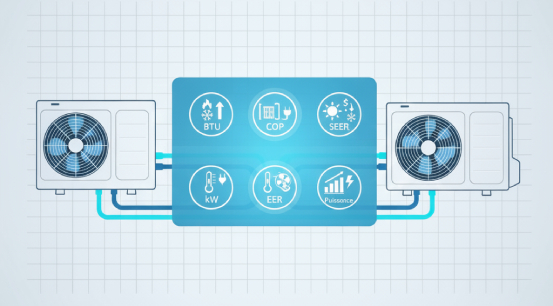
The field of air conditioning uses precise terminology. These terms describe essential technical concepts needed to understand how a system works, assess its performance, and make a choice suited to your needs. Here are the main ones.
1. BTU (British Thermal Unit)
The BTU is a unit of measurement for cooling capacity. It indicates the amount of heat an air conditioner can extract from a room. The higher the BTU, the larger the area the unit can cover.
Example: a 25 m² space requires approximately 9,000 to 12,000 BTU.
2. COP (Coefficient of Performance)
The COP expresses the energy efficiency of an air conditioner. It is the ratio between the energy produced as heat and the electrical energy consumed.
A COP of 4 means the unit delivers four times more energy than it consumes. The higher the COP, the more efficient the air conditioner.
3. SEER et SCOP
SEER (Seasonal Energy Efficiency Ratio) measures seasonal efficiency in cooling mode.
SCOP (Seasonal Coefficient of Performance) measures seasonal efficiency in heating mode.
These indices reflect the overall performance of an air conditioner over a long period and help estimate actual energy savings throughout the year.
4. Types of Air Conditioners
• Split: Composed of an indoor and an outdoor unit, the most common format for offices and homes.
• Monobloc: A single unit, convenient for small spaces, often portable.
• Multisplit: One outdoor unit connected to multiple indoor units. Ideal for multi-room buildings.
5. Refrigerants
Refrigerant gases transfer heat within the system.
The most used are R410A and R32.
R32 is currently preferred because it is more efficient and has less environmental impact. These gases must be handled carefully, as leaks affect both performance and the environment.
6. Key Components
• Compressor: The heart of the system, compressing the refrigerant to start the thermal cycle.
• Condenser: Located outside, it releases heat to the surrounding air.
• Expansion valve: Reduces the gas pressure before it enters the evaporator.
• Evaporator: Absorbs heat from the room and replaces it with cooled air.
7. Dehumidification Rate
A good air conditioner also regulates humidity. This rate indicates the amount of water extracted from the air per hour. Excess humidity reduces comfort and promotes equipment corrosion.
8. Inverter Technology
Found in modern units, it adjusts the compressor speed to stabilize temperature and reduce energy consumption. It is now a key performance criterion.
9. Maintenance and Cleaning
Regular maintenance extends the life of the air conditioner. Cleaning filters, checking refrigerants, and inspecting circuits ensure consistent performance and better air quality.
10. The Importance of Understanding These Terms
Knowing these concepts helps choose a unit suited to the room size, anticipate operating costs, and prolong the system’s lifespan.
At ADTF, this technical knowledge guides customer advice and support.